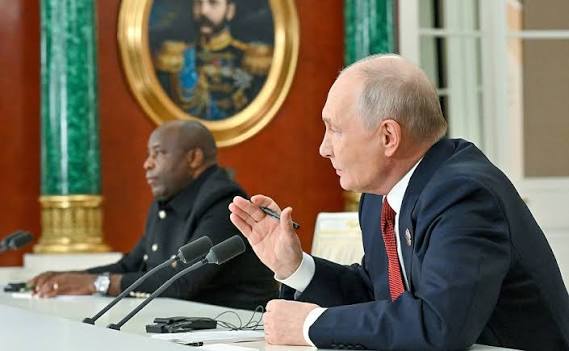
Russia is expanding its financial footprint in Africa through A7. This international payment platform has opened operations in Nigeria and Zimbabwe, as Moscow seeks to build alternative banking channels for businesses trading with the continent amid tightening Western sanctions. Russia is aggressively increasing its financial influence in Africa with A7, an international payment platform providing fresh alternatives for cross-border trade amid Western sanctions. The A7 platform, launched by a defence-focused Russian bank in 2024, supports over 15,000 mostly exporter clients, and aims to further expand across Africa. Despite being sanctioned by the US in March, A7 has seen its global transaction value spike by 54% year-on-year. Moscow’s financial push is part of a wider strategy to deepen its economic ties with Africa. The company plans further expansion across Africa to support Russian exporters , importers and local businesses seeking cross-border payment services, executives said at the RBC Foreign Trade Forum in Moscow on Wednesday. A7 deputy managing director for sales, Stanislav Lazarev, said the platform intends to serve African companies interested in transactions with Russian businesses. The expansion comes despite US sanctions imposed on A7 last month. Washington said Iran was using the platform, an allegation the company has denied, Reuters reported. Developed by defence sector-focused bank PSB in 2024, A7 has become an important part of Russia's alternative cross-border payments infrastructure. It has approximately 15,000 clients, mostly exporters in the agricultural and metallurgy industries. Russia builds alternative financial channels in Africa A7's expansion is part of Moscow's broader efforts to strengthen financial relationships with African countries and reduce its reliance on Western-controlled payment systems. In February, Russia expanded the list of countries whose banks are permitted to trade currencies in its financial market, adding Nigeria, Tunisia and Ethiopia . Algeria, Egypt, Morocco and South Africa were among the countries included in the original list approved in September 2023. The platform's growing international reach is also reflected in its transaction figures. China and Hong Kong accounted for 55% of A7's transactions between January and September, followed by the United Arab Emirates. The value of payments processed through the platform increased 54% year-on-year, while transaction volumes rose 83%, Lazarev said. Moscow deepens its economic push into Africa Beyond financial services, Russia is seeking to expand its commercial relationships across the continent through agriculture, energy, infrastructure and defence. President Vladimir Putin recently renewed Moscow's commitment to supplying African countries with grain, fertiliser, technology and infrastructure partnerships. Russia-Africa trade exceeded $27 billion in 2025, according to the Kremlin, although the figure remained below Putin's $40 billion target announced at the inaugural Russia-Africa Summit in 2019. Moscow is also pursuing nuclear energy partnerships , including agreements involving the Republic of Congo and Guinea, as it seeks to establish longer-term economic and strategic relationships across the continent. The expansion comes against a backdrop of growing Russian influence in Africa . According to the University of Denver's Foreign Bilateral Influence Capacity index, Russia's share of foreign influence on the continent increased from 2.2% in 2015 to 2.8% in 2024, reflecting its expanding presence amid continued competition from Western powers and China.
Read also Morocco commits $3 million to train 300 African aviation inspectors as Africa’s richest king pushes to make the country a continental aviation hub